| |
| Wednesday, 14 October 2026 |
| Cash for Coronets - Transatlantic Trailblazers of the Gilded Age |
| Mark Meredith |
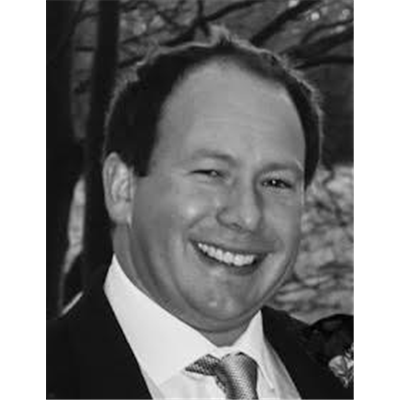 |
Between 1870 and 1914, at the height of America's Gilded Age, no less than 454 heiresses exchanged their crisp new American dollars for musty old European titles. Aside from the new lease of life now afforded to the previously cash-strapped aristocrats, the first task was to restore their crumbling, ancestral piles - many of which today are counted among the UK's best-loved national treasures. But just who was taking advantage of who? In this lecture, we'll explore some of the more prominent of those stately homes that owe their existence entirely to their fairy-dollar godmothers, and we'll discover the unfaillingly astonishing stories of how the dollars were made; why and how the couples were matched; and, how the money was spent on the often overlooked legacies of these transatlantic trailblazers. Image: Mark Meredith Mark's area of special interest is America - its great collectors/collections, its social history and its architecture. He is a regular speaker in Europe and the USA at the New York Historical Society, and is the founder of "AmericanAristocracy.com." Richly illustrated, laced with humour, you will be left buzzing with thought and opinion. |
|
| Wednesday, 11 November 2026 |
| Iceland: More Than Fire and Ice |
| James Vaux |
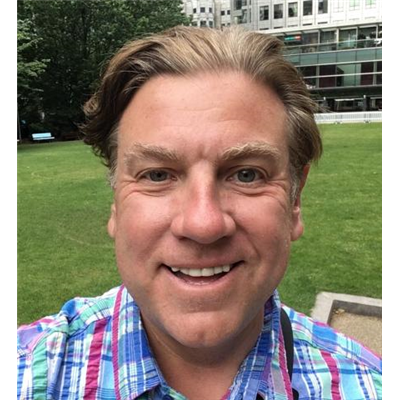 |
Iceland is the size of Portugal, yet only has the same population as Coventry. It has suffered centuries of natural disasters, plague and famine, boom and bust. It was only able to support and exhibit homegrown artists from 1900. But it has made a huge contribution to global culture through its outstanding literature. Its medieval Sagas and Eddas contain the Nordic foundation story, much of what we know about the Vikings and Norse Mythology, and have inspired foreign artists and writers for centuries. More recently Iceland has produced a Nobel prize winner for literature, conquered Nordic Noir and one in ten Icelanders will publish a book in their lifetimes. This talk, illustrated with extraordinary art and photography, focuses on three Icelandic works of literature to tell the fascinating story of the island and its culture over a millennium. It features the country's own art from the Viking age to the 20th century, together with Brtitish works inspired by Iceland. These include paintings, sketches and even stain glass windows by Henry Fuseli, Edward Burne-Jones and W. G. Collingwood, together with the intrepid travel journals of Henry Holland, William Morris, W. H. Auden and Louis MacNeice. Image: James Vaux James Vaux is a researcher and lecturer specialising in Nordic arts, culture, design and history. For the past two years he has been travelling across the Nordics, visiting and researching the homes and colonies of artists, writers, designers and musicians to provide first hand insights into their lives and works. James took a law degree at Oxford with First Class Honours and qualified as a solicitor before switching career. As a managing director of the international bank Rothschild & Co, he set up and ran the bank’s Nordic operations, living and working in Scandinavia and immersing himself in the countries’ arts, culture and history. James then gained an MA (Distinction) at UCL in Scandinavian Studies. |
|
| Wednesday, 09 December 2026 |
| The Three Kings - The Real Story |
| Tony Rawlins |
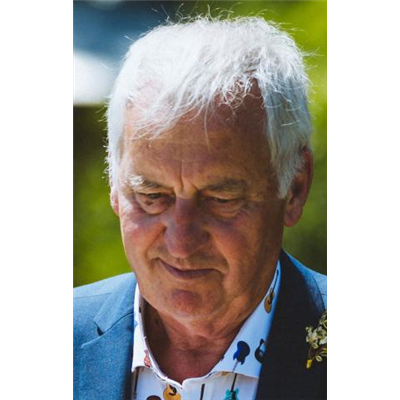 |
A light hearted seasonal lecture for Christmas, describing what we actually know about the three kings - or rather what we don't know. For a start we don't know how many "kings" there were. Matthews's Gospel doesn't tell us. We assume they were 3 because they brought 3 gifts. But why gold, frankincense and myrrh? Also, there's no reason to suppose they were kings of anywhere. It took 500 years for them to be given names, even though we still don't really know their gender - some of them might have been women. And since they gave away the timing of the birth of the baby Jesus to Herod the alleged baby slayer, we can reasonably assume they weren't too clever - let alone wise! Image: Tony Rawlins Tony was educated at Highgate School, starting his career in advertising in 1965 as a mail boy in J Walter Thompson. He graduated through the training system there to become an account director and subsequently worked in a number of agencies before setting up on his own in 1985. There he handled primarily Guinness advertising in Africa and the Caribbean, where he produced many commercials and print ads for them over a period of 15 years. He remains active as a consultant in the industry, but more recently has concentrated on more philanthropic projects - producing a film in the rural villages of Nigeria for the London School of Hygiene and Tropical Medicine and completing a sanitation project in Haiti after it was devastated by Hurricane Matthew in 2016. He has been a member of the Arts Society for many years and has been an accredited lecturer since 2017. |
|
| Wednesday, 13 January 2027 |
| Iconoclasm And The Art of Destruction |
| Aliki Braine |
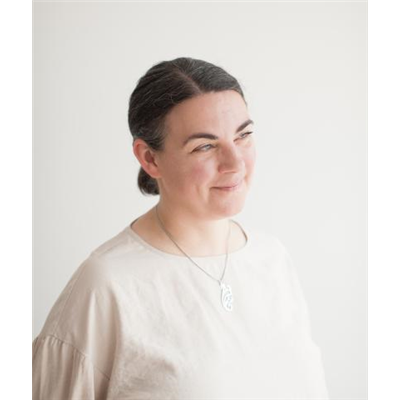 |
The most significant proof of the power of art is the fact that some people feel the need to destroy it. Attacks and acts of destruction have gone on for as long as art has existed, from the iconoclastic riots of the Protestant Reformation to climate protesters' defilemet of historial paintings in natiional museums. This lecture will explore artworks that have survived despite attacks, the appeal of ruins and the practice of using destructive strategies to create art. Image: Aliki Braine Aliki studied at The Ruskin School of Fine Art, Oxford, The Slade School and The Courtauld Institute where she was awarded a distinction for her masters in 17th century painting. She has been working for The National Gallery for 25 years and teaches for Christie’s Education, The Wallace Collection and numerous private clients. Aliki is also a practicing artist who regularly exhibits her photographic work internationally and has taught at Camberwell College of Art. |
|
| Wednesday, 10 February 2027 |
| Thomas Gainsborough: Sick of Portraits? |
| Alan Read |
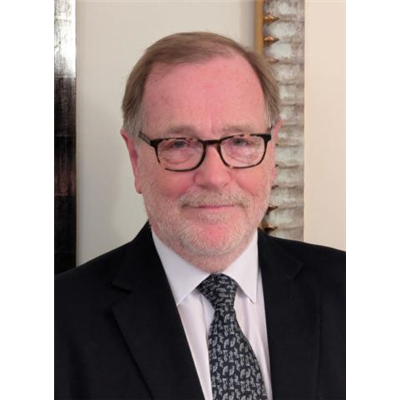 |
Marking the 300th anniversary of his birth (1727) this lecture will look at the life and works of Thomas Gainsborough. Justly considered one of this country’s greatest ever portrait painters, along with his rival Joshua Reynolds, he created what has been called the Golden Age of British Art. Despite achieving great artistic and financial success he actually hated his ‘day job’: “I am sick of portraits,” he said, “and wish very much to take my viol da gamba and walk off to some sweet village where I can paint landskips and enjoy the fag end of life in quietness and ease”. Find out how he achieved acclaim and financial success…and what he would have. Image: Alan Read Alan has a masters and first-class honours degree in History of Art from Birkbeck College, University of London. He is a gallery guide at Tate Britain and regularly lectures at both London Tates. For twenty years he was a gallery guide and lecturer at the National Portrait Gallery and the Dulwich Picture Gallery. He also works as a London Blue Badge Guide. |
|
| Wednesday, 10 March 2027 |
| Robert Keable: WW1 Chaplain and Writer |
| Simon Keable-Elliott |
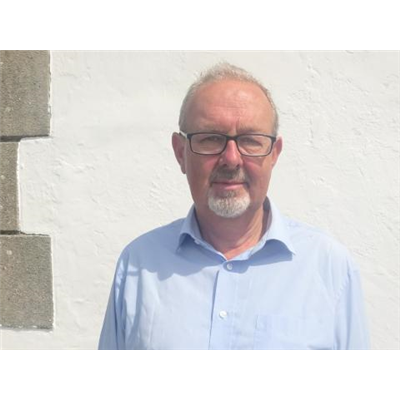 |
Robert Keable’s first, semi-autobiographical, novel Simon Called Peter, about a WW1 chaplain's affair with a nurse, shocked many, was name checked in The Great Gatsby, and became a huge international best seller. Keable led an extraordinary life as a Cambridge educated priest who served as a missionary in Africa, before becoming chaplain to ill-treated black labourers in France. After the war he left the church, and his wife, and ran away to Tahiti with his mistress to live for a year in Paul Gauguin’s house. He stayed in Tahiti, built his own house, continued writing and married a Tahitian princess. Image: Simon Keable-Elliott A graduate of Durham University, Simon was Head of Politics and Director of Model United Nations at Royal Russell School for 25 years. He now works as a writer, researcher, and lecturer. His first book Utterly Immoral, Robert Keable and his scandalous novel was published in November 2022. His second book Guys like Gauguin, Writers and Artists in 1920s Tahiti will be published in August 2026. He has also written articles for, among other publications, The Church Times, The History News Network and The Journal of the Society for Army Historical Research. He is a regular speaker at events run by The Arts Society, Western Front Associations, U3As and other Societies |
|
| Wednesday, 14 April 2027 |
| The Glories of Ancient Rome |
| Paul Roberts |
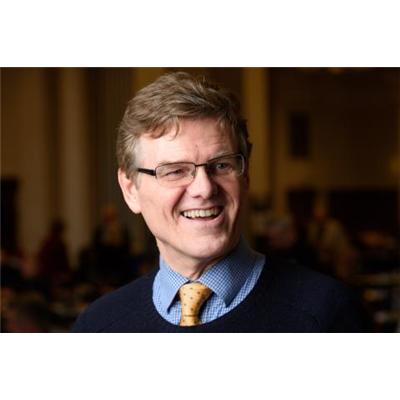 |
Rome, as we all know, was not built in a day. It took centuries to construct the eternal city, and Rome’s glorious monuments and those who created them are the focus of this new talk. Monument in Latin means a remembrance and all the temples, baths, arches, theatres, arenas and stadiums, in addition to their specific functions had another broader purpose – to glorify the Emperors that built them. From Augustus and Nero to Hadrian and Constantine, we’ll look at these eternally fascinating rulers the good, the bad and the downright mad, finding out how and why these monuments were built, and their impact on the people and city. We’ll also learn the often sad story of why they look like they do now. It is sometimes hard to see beyond the ruins of today, so using masterpieces of Roman art and beautiful reconstructions and with the Emperors as our guides, we’ll go on a journey through Rome in its golden prime. From the splendid civic hubs of the great Imperial Forums to the beautiful, soaring temples of the gods, the dazzling gleam of marble and mosaic in the great public baths and the roar of the crowds at the Circus Maximus and the Colosseum. Image: Paul Roberts From 1994 to 2015 he was Senior Roman Curator in the Greek and Roman Department at the British Museum, where he curated the exhibition Life and Death in Pompeii and Herculaneum (2013). Arriving in the Ashmolean Museum, Oxford in 2015, in 2019/20, he curated Last Supper in Pompeii, a tribute to the Roman love affair with food and wine. He was awarded an OBE in the New Year Honours List 2025 for services to Archaeology and Heritage. |
|